Ask a question
You can ask questions or search for stories, guides, or tools that help you.

You can ask questions or search for stories, guides, or tools that help you.
The website remembers your choices on this device only. If you use another phone or computer, your settings will not be there.

Easier words with pictures to help explain some ideas.
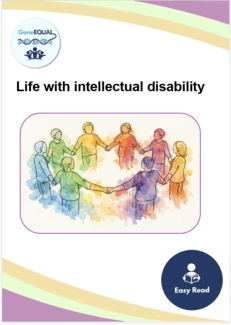
This information is from Life with intellectual disability.
It was made by people with intellectual disability.
You can find it on our resource page.

Intellectual disability is a lifelong condition.
It slows down our learning.
It affects our skills and behaviours in good and bad ways.
It affects our day to day lives.
With the right support we live successful lives.
We can have different support needs.
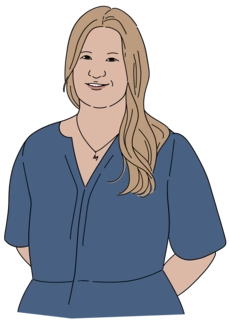
Disability is one part of who we are.
People with intellectual disability are people first.
Intellectual disability is a lifelong condition.
It slows down our learning.
It affects our skills and behaviours in good and bad ways.
It affects our day to day lives.
With the right support we live successful lives.
We can have different support needs.
Some people need a little support.
Others need more support.
Support needs can also change.
Many of us have other health conditions.
This information is from a resource called Life with intellectual disability.
It was made by people with intellectual disability.
You can find this resource on our resource page.
People with intellectual disability are people first.
Cultures are the beliefs, traditions and ways of life that are important to different groups of people.
All aspects of our lives affect our health.