Ask a question
You can ask questions or search for stories, guides, or tools that help you.

You can ask questions or search for stories, guides, or tools that help you.
The website remembers your choices on this device only. If you use another phone or computer, your settings will not be there.
Easier words with pictures to help explain some ideas.
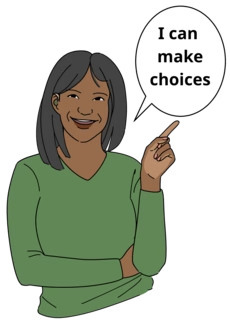
People have the right to make choices if you can.
Making choices can be hard.
People can learn how to make choices.
People can have support to make choices.
Health people like doctors can think people with intellectual disability cannot make choices.
Some people with intellectual disability
Health people need to find out if you can make choices.
This is called capacity.
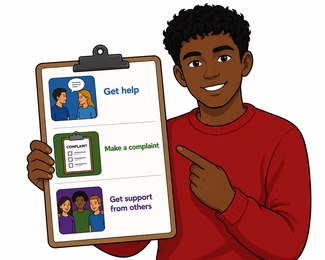
Supported decision making is when people get support to make their own choices.
Support can be
It gives you control over your life.
It respects your health rights.
Knowing how to choose is a skill. Often, it can be learned.
Health professionals sometimes assume that people with intellectual disability will not be able to choose.
In fact, people with intellectual disability have a range of abilities. Some:
Health professionals need to find out if the person has the skills to make the choice. This is called capacity to decide.
Supported decision making is when you make your own choices with help from people you trust. These people help you understand information and think about what might happen. Then you decide what you want to do. is when people get the information, tools, time and support they need to make their own choices. It gives people control over their own lives. It respects the health rights of people with intellectual disability.